




 0
0
 0
0
Table of Contents
- What a Crossbite Actually Is
- How Invisalign Corrects a Crossbite
- What Invisalign Can and Cannot Fix for Crossbites
- Why Treating a Crossbite Matters Beyond Aesthetics
- What to Expect During Crossbite Treatment With Invisalign
- Why Provider Experience Matters for Crossbite Cases
- FAQs
- Find Out If Invisalign Can Fix Your Crossbite
A crossbite is one of those dental issues that many patients live with for years without fully understanding what it is or what it is doing to their teeth over time. They might notice that their jaw feels slightly off when they bite down. Or that certain teeth seem to be wearing down faster than others. Or simply that their smile does not look quite symmetrical when they look in the mirror.
What they often do not realize is that a crossbite, left untreated, causes progressive damage. This can cause uneven wear, jaw strain, gum recession on the affected teeth, and, in some cases, temporomandibular joint problems that develop slowly and worsen over years of abnormal bite mechanics.
The good news is that Invisalign treats many crossbite cases effectively. And for patients who have been living with a crossbite and wondering whether clear aligners are a realistic option for their situation, understanding exactly how Invisalign approaches this type of bite problem gives a much clearer picture than the general information most patients find online.
Patients across Agoura Hills, Calabasas, Westlake Village, Thousand Oaks, Oak Park, Hidden Hills, Newbury Park, Bell Canyon, and Lake Sherwood considering Invisalign in Agoura Hills for crossbite correction will find a complete, honest breakdown of what to know before starting right here.
What a Crossbite Actually Is
A crossbite occurs when one or more upper teeth sit inside the lower teeth rather than outside them when the mouth is closed. In a normal bite the upper teeth sit slightly outside the lower teeth all the way around. A crossbite reverses this relationship for some or all of the teeth involved.
Crossbites can affect the front teeth, the back teeth, or both. A posterior crossbite affects the molars and premolars at the back of the mouth and is more common than a front crossbite. An anterior crossbite affects the front teeth and is often more noticeable aesthetically.
It is also worth understanding the difference between a dental crossbite and a skeletal crossbite. A dental crossbite means the teeth themselves are positioned incorrectly even though the jaw structure is fundamentally normal. A skeletal crossbite means the jaw itself is contributing to the problem, with one jaw wider or narrower than it should be relative to the other.
This distinction matters a great deal when it comes to treatment planning. Dental crossbites respond well to orthodontic treatment like Invisalign. Skeletal crossbites, depending on their severity, may require additional interventions beyond aligners alone. Patients with significant skeletal concerns are sometimes also assessed for broader restorative needs, and in those cases an experienced cosmetic dentist in Agoura Hills who understands both orthodontic and restorative planning is well positioned to coordinate the full treatment picture.
How Invisalign Corrects a Crossbite
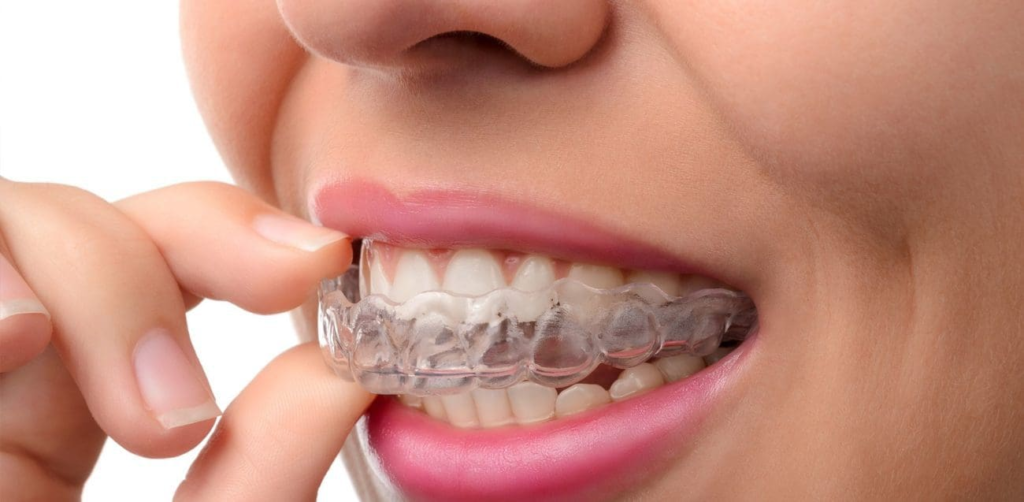
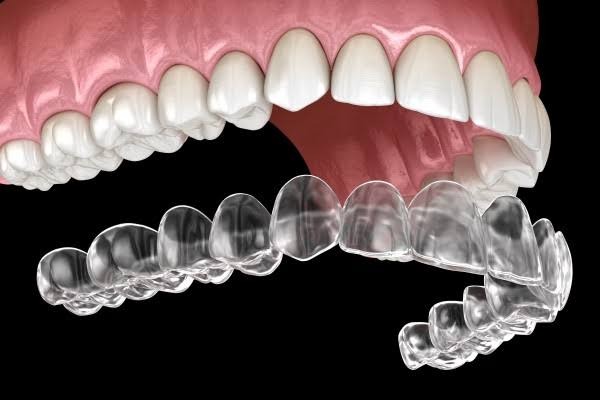
For dental crossbites Invisalign works by gradually shifting the affected teeth out of their reversed position and into correct alignment with the opposing arch.
The aligners apply controlled, precise pressure to the teeth based on a digital treatment plan mapped out using ClinCheck software before treatment begins. For crossbite correction, this plan specifically addresses the tooth movements needed to bring the affected teeth into a correct bite relationship.
Attachments play an important role in crossbite treatment. These small tooth-colored buttons bonded to specific teeth help the aligners grip the teeth more effectively and apply the precise directional forces needed for the crossbite correction movements. The position and shape of attachments are planned specifically for each patient’s case.
In some posterior crossbite cases, elastics worn between the upper and lower aligners provide additional forces that help correct the transverse relationship of the arches more effectively than aligners alone could achieve. If elastics are part of the plan your provider will explain exactly how and when to wear them.
What Invisalign Can and Cannot Fix for Crossbites
Being honest about the range of crossbite cases Invisalign handles well and where its limitations begin is important for setting realistic expectations.
Mild to moderate dental crossbites are well within Invisalign’s capabilities. These cases are among the most common presentations and respond predictably to clear aligner treatment when planned by an experienced provider. Patients in this category can achieve meaningful, lasting correction of the bite relationship alongside any alignment improvements the treatment addresses.
Severe dental crossbites may still be treatable with Invisalign but require more complex treatment planning and a longer treatment timeline. An experienced provider will assess the severity honestly and discuss what is realistically achievable with clear aligners for the specific case.
Skeletal crossbites are where Invisalign reaches its clearest limitations. When the crossbite is driven by the underlying jaw structure rather than tooth position, orthodontic treatment alone may not fully correct the bite relationship. In these cases Invisalign may be part of a broader treatment plan that includes palatal expansion, jaw surgery, or other interventions depending on the patient’s age and the severity of the skeletal discrepancy.
Here is a simple summary of how Invisalign performs across different crossbite types:
- Mild dental crossbite — highly treatable with Invisalign alone, predictable and reliable results
- Moderate dental crossbite — treatable with careful planning, attachments, and sometimes elastics
- Severe dental crossbite — may require combination approach or extended treatment planning
- Skeletal crossbite — Invisalign alone often insufficient, additional interventions may be necessary
Why Treating a Crossbite Matters Beyond Aesthetics
Patients sometimes come in for crossbite correction primarily because of how their smile looks. But the clinical reasons for treating a crossbite go well beyond appearance and are worth understanding fully before starting treatment.
Uneven bite forces from a crossbite cause accelerated and uneven wear on the affected teeth. Over years this wear can expose dentin, cause sensitivity, and eventually compromise the structural integrity of the teeth involved. Addressing the crossbite stops this progressive damage before it requires more significant restorative intervention. For patients whose crossbite has already caused visible wear or chipping across the front teeth, porcelain veneers are sometimes used as a cosmetic finishing step after the bite has been corrected by Invisalign, restoring the appearance of teeth that were damaged by years of abnormal bite forces.
Gum recession is another consequence of untreated crossbite. Teeth that bear abnormal biting forces over time often develop recession on the buccal surface, the side facing the cheek. This recession is often irreversible and can eventually require treatment to prevent further bone and tissue loss around the affected teeth.
Jaw strain and temporomandibular joint discomfort are also associated with uncorrected crossbites, particularly in patients who have compensated for the bite asymmetry with habitual jaw shifts over years of use. Correcting the bite removes the source of this compensatory strain and can reduce associated jaw muscle tension and discomfort over time.
What to Expect During Crossbite Treatment With Invisalign
For confirmed crossbite candidates the treatment process follows a similar path to standard Invisalign treatment with a few specific additions.
The consultation includes a comprehensive bite assessment alongside the standard dental examination and digital scanning. Photographs, X-rays, and in many cases 3D cone beam imaging provide the full picture of the bite relationship and the jaw structure before the treatment plan is finalized.
The ClinCheck preview shows not just the tooth movements but specifically the projected changes to the bite relationship throughout treatment. Patients can see how the crossbite is planned to correct over the course of the aligner sequence.
Check-in appointments during crossbite treatment are particularly important. Bite correction requires close monitoring to ensure the teeth are tracking as planned and the bite changes are progressing correctly. Missing appointments during this type of case carries more risk than in straightforward alignment cases where the treatment is less complex.
After active treatment retainers are essential. Crossbite corrections, like all orthodontic outcomes, are maintained by consistent retainer wear after treatment is complete. The bone and tissue around the corrected teeth need time to stabilize in their new positions, and retainers are what hold everything in place during this consolidation period.
For patients who are completing crossbite treatment and are interested in brightening their smile as a finishing touch, professional teeth whitening after Invisalign is complete is a simple, effective way to complement the alignment result with a noticeably fresher, brighter appearance.

Agoura Advanced Dentistry serves patients across Agoura Hills, Calabasas, Westlake Village, Thousand Oaks, Oak Park, Hidden Hills, Newbury Park, Bell Canyon, and Lake Sherwood. Call (818) 874-3533 or visit our website to book your Invisalign consultation today.
Why Provider Experience Matters for Crossbite Cases
Crossbite correction with Invisalign is more technically demanding than simple crowding or spacing cases. It requires detailed bite analysis, precise treatment planning, and the clinical experience to know which combination of attachments, elastics, and aligner movements will produce stable correction for the specific type and severity of crossbite being treated.
An experienced provider who has managed a high volume of diverse Invisalign cases, including bite correction cases, brings a level of clinical judgment to crossbite treatment that goes well beyond familiarity with the basic mechanics of clear aligner therapy. This experience is what produces outcomes that are not just cosmetically improved but genuinely functionally corrected in a way that protects the teeth and jaw long term.
For patients who have more extensive dental needs beyond the crossbite itself, choosing a provider who also offers full mouth restoration means the entire treatment picture, orthodontic, cosmetic, and restorative, can be planned and managed by a single experienced team rather than fragmented across multiple separate practices.
FAQs
Can Invisalign fix all types of crossbites?
Invisalign works well for mild to moderate dental crossbites. Skeletal crossbites or severe cases may require a combination approach beyond clear aligners alone. A thorough consultation determines what is achievable for your specific case.
How long does crossbite treatment with Invisalign take?
It depends on the severity of the crossbite. Mild cases may show significant improvement within twelve months. More significant crossbites can take eighteen months or longer to correct fully.
Is crossbite correction with Invisalign painful?
Most patients experience mild pressure when switching to a new set of aligners. Elastics, if used, may create some additional pressure initially but most patients adapt within a few days.
Will my crossbite come back after Invisalign?
It can if retainers are not worn consistently after treatment. Nightly retainer use is what maintains the corrected bite position and prevents gradual relapse over time.
How do I know if my crossbite is treatable with Invisalign?
A thorough consultation including bite analysis, digital scanning, and in some cases 3D imaging gives your provider everything needed to assess whether Invisalign is appropriate for your specific crossbite and what results are realistically achievable.
Find Out If Invisalign Can Fix Your Crossbite
The only way to know whether Invisalign is the right solution for your crossbite is a proper consultation with an experienced provider who takes the time to assess your bite thoroughly before making any recommendations.


